CEPT Essay Prize 2025
Deliverables:
- Competition Poster
CEPT University is a leading institution in Gujarat, India, focused on architecture, planning, design, and the built environment studies
Known for its commitment to research and cross-disciplinary exploration, the university conducts an annual Essay Prize to invite critical writing across its faculties. The 2025 edition was titled “Abandon”, conceived not as a singular act of loss, but as a layered condition through which objects, spaces, and beings gather meaning in their separation.
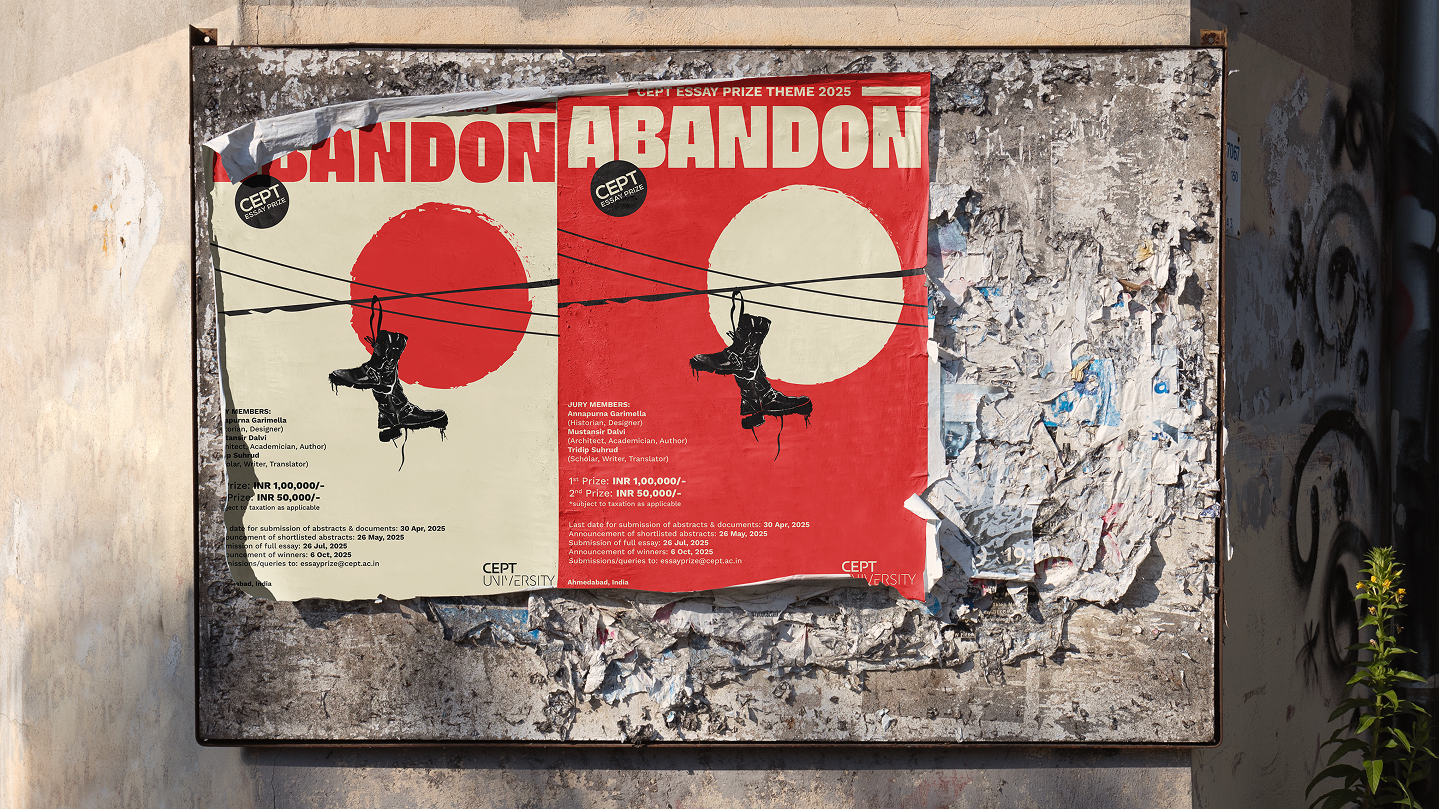
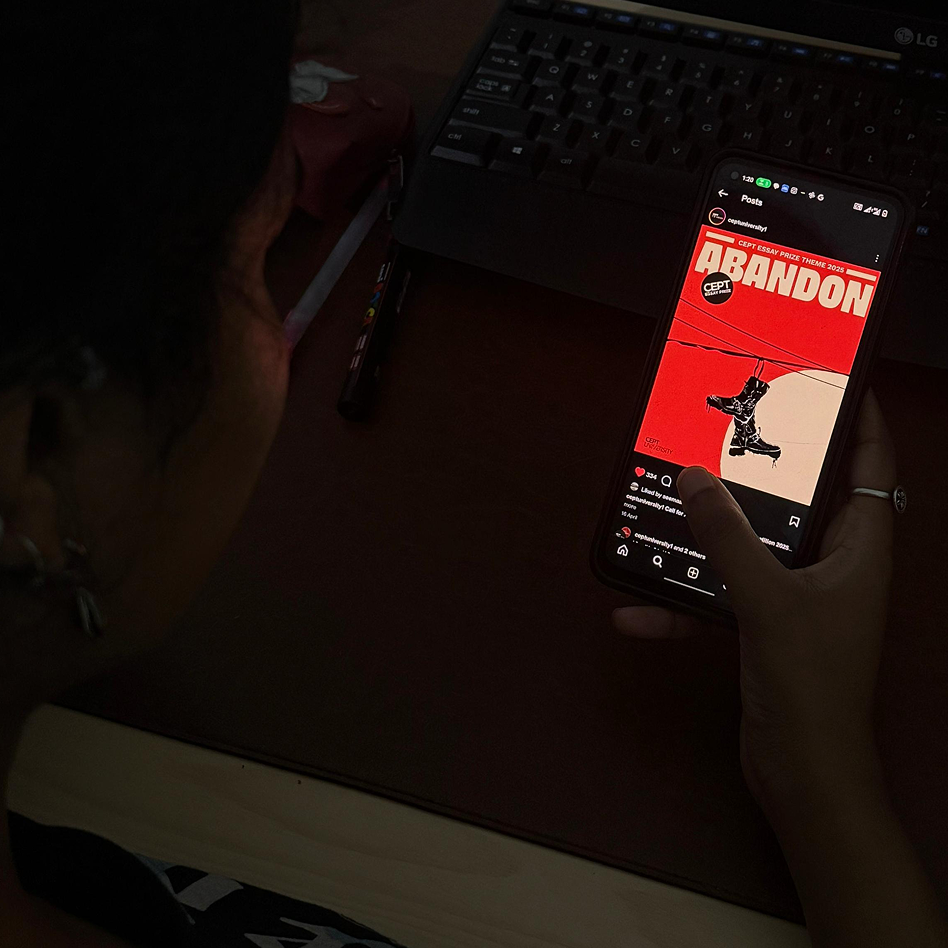
Pomoco was commissioned to design the visual identity and call-for-entries poster for the 2025 edition, with the goal of clearly articulating the theme while making it visually compelling across CEPT’s student body
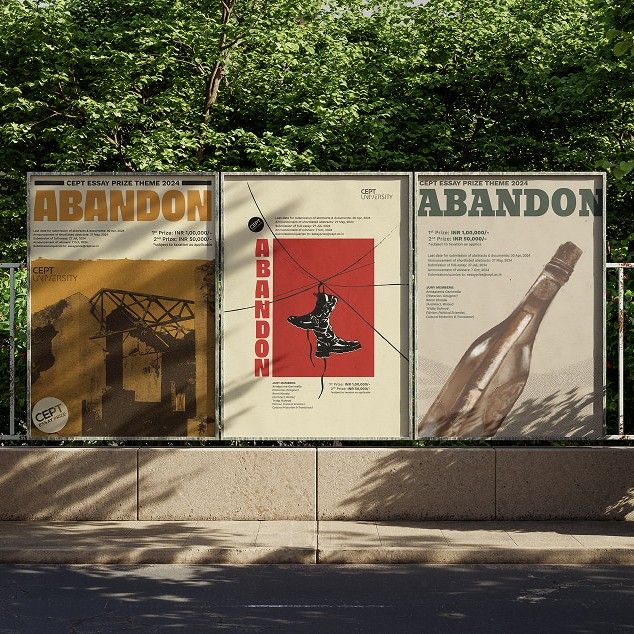
Drawing on Georg Simmel’s framing of the “beauty of the object in its passage in time,” the theme encouraged young essayists to view Abandon as both a noun almost still, paused, reverberating and a verb which is active, cyclical, and saturated with history.
The brief invited writers to reflect on everything from derelict textile mills and receding rivers to old age and mythological letting go positioning Abandon as something that doesn’t merely disappear but reconfigures the world it leaves behind.
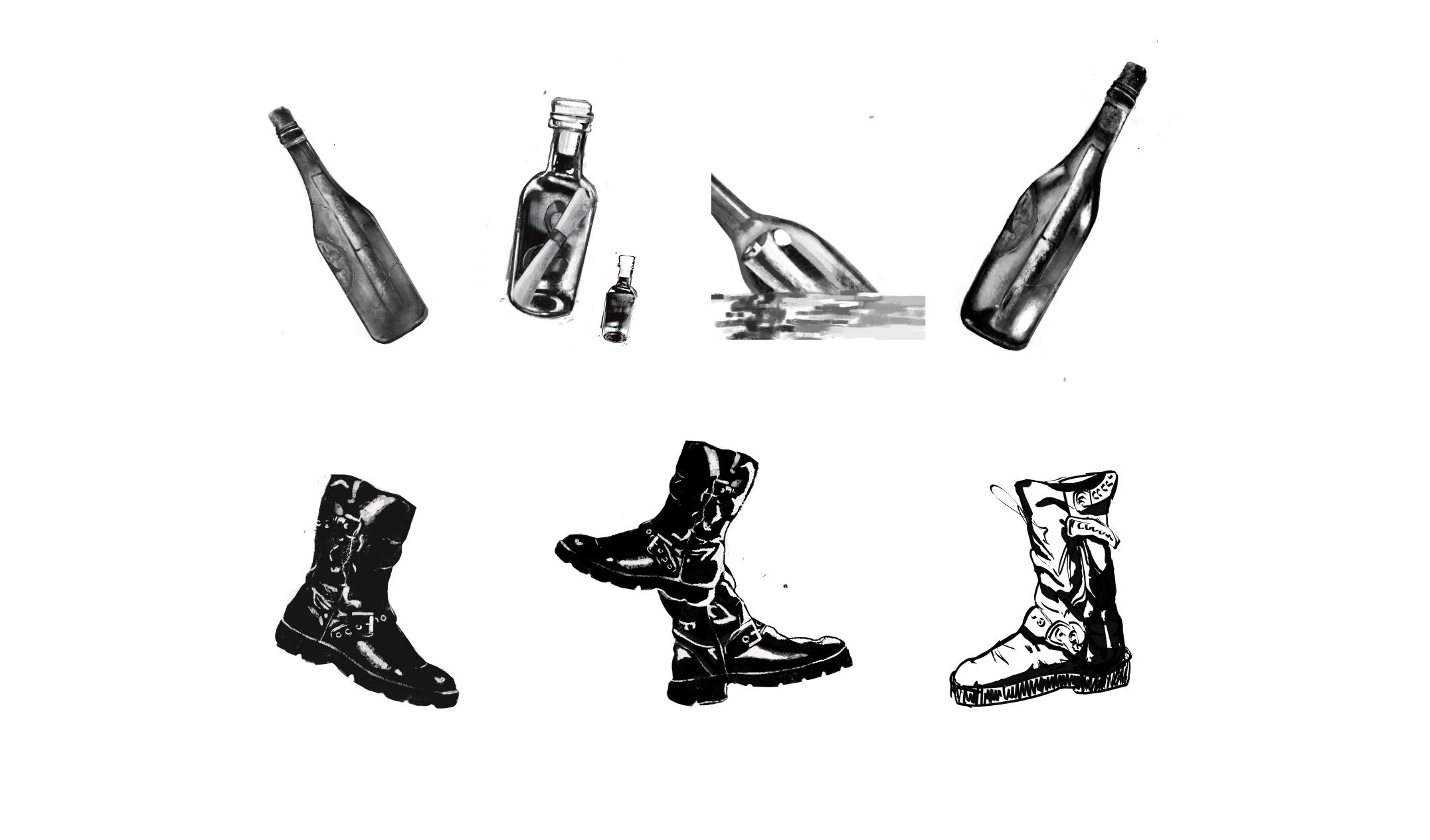
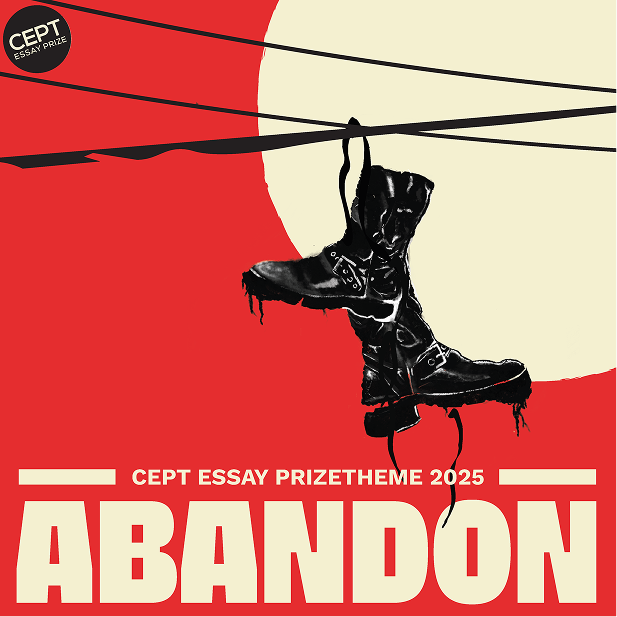
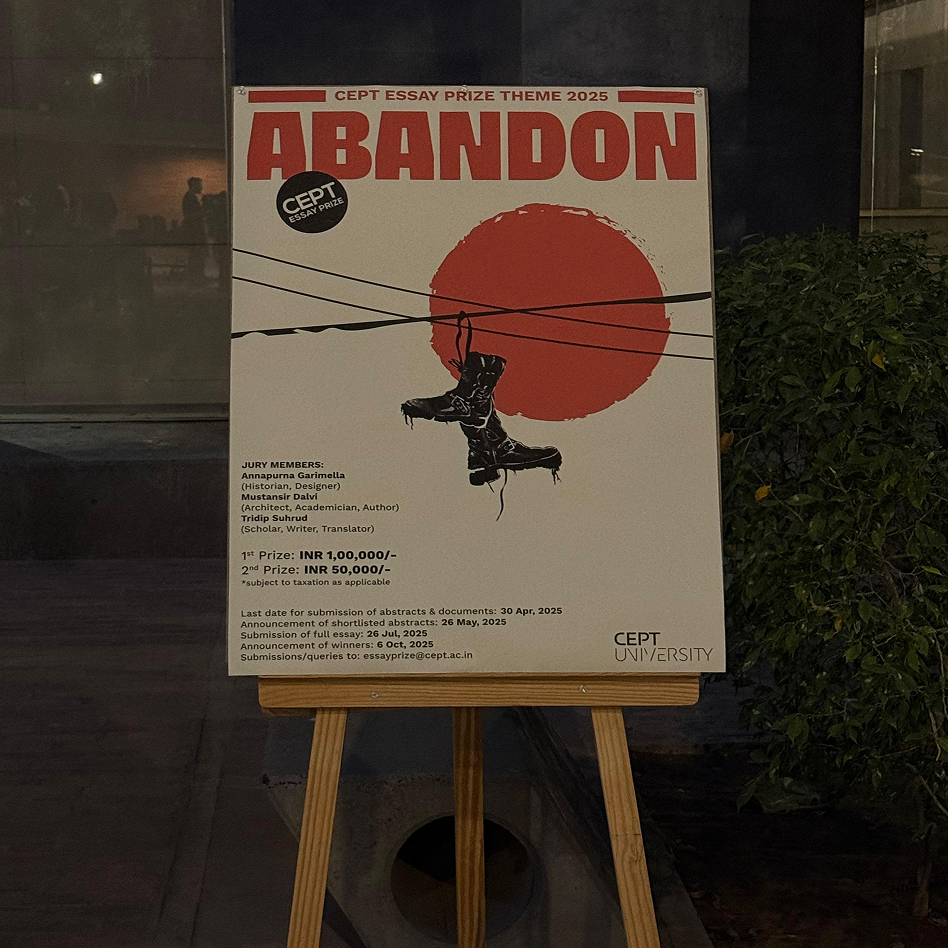
Rather than depicting ruin as drama, the design focused on subtlety and the slow rhythm of erosion. We worked with the central image of a pair of worn boots hanging from electrical wires common in urban streetscapes, read not just as detritus but as a memory suspended in time.
This motif was chosen for its ability to quietly speak of abandonment without finality: an object left behind that still bears witness. In the background, a rising sun holds space not as a symbol of optimism but as an indicator of temporal continuity, marking the ongoing presence of the abandoned object in a living world. The palette was kept monochrome to strip distractions and foreground the slow aging of the boots and the sharpness of the wire, accentuated through flat lines, soft shadows, and compositional restraint.
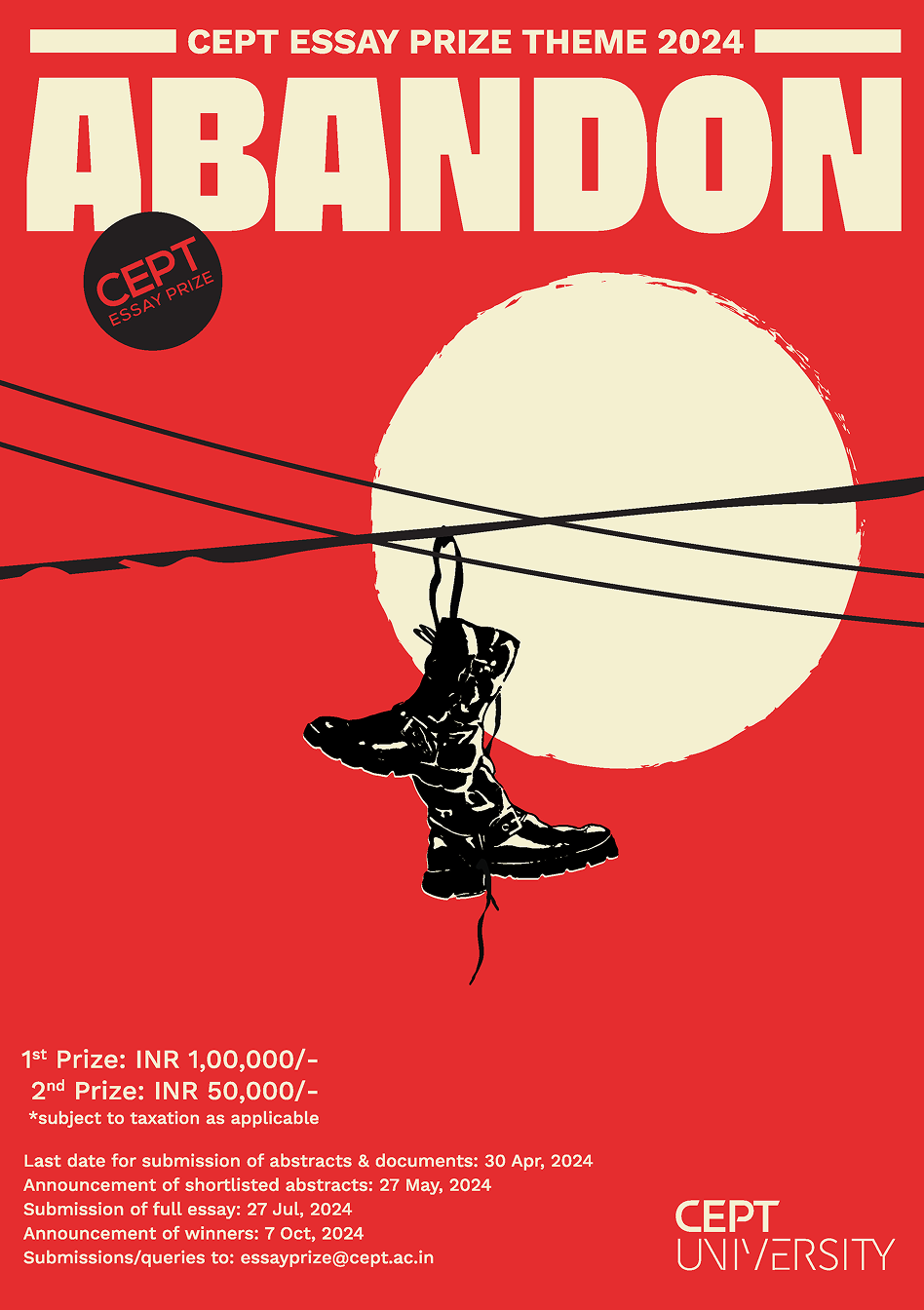
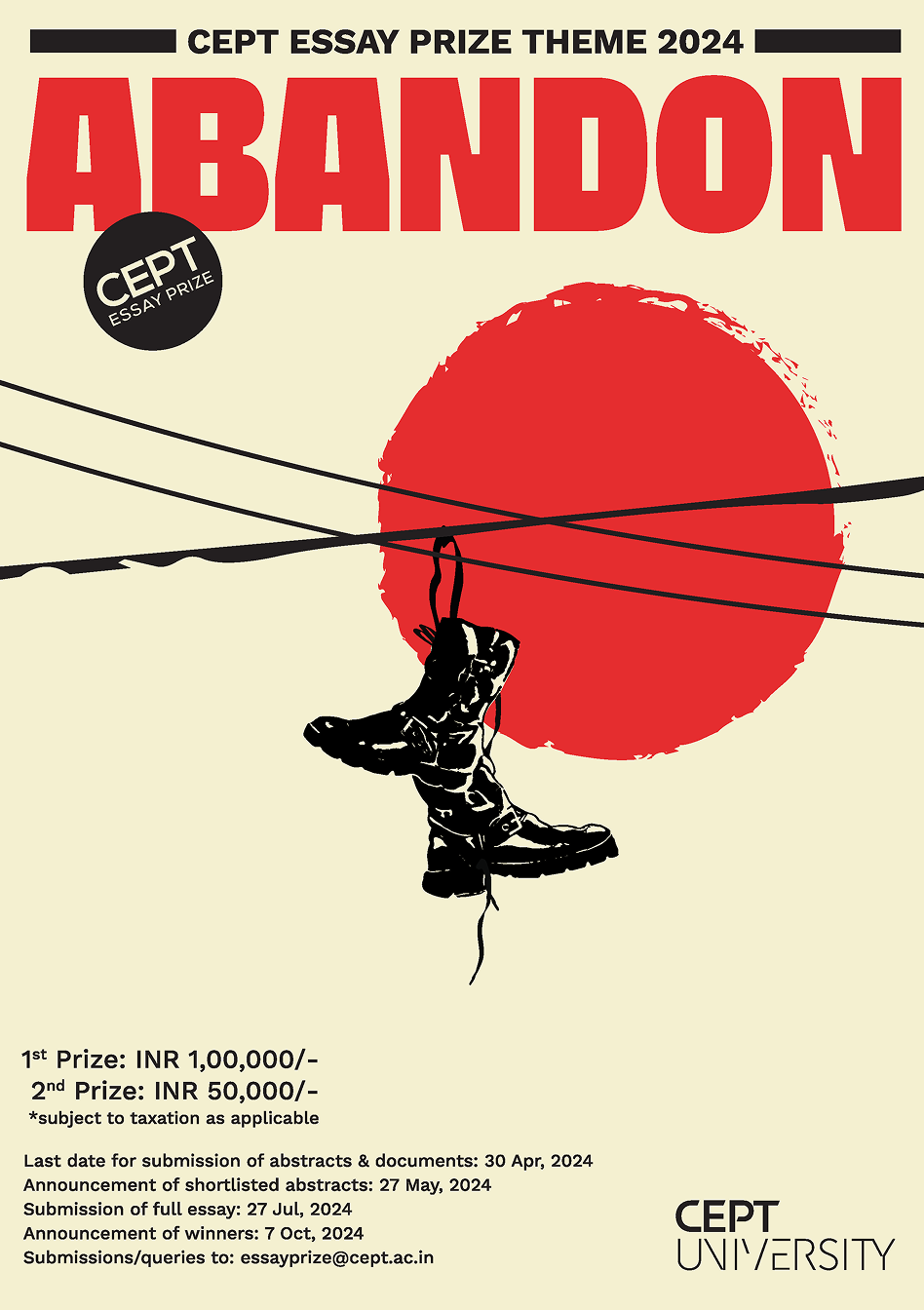
The palette was kept monochrome to strip distractions and foreground the slow aging of the boots and the sharpness of the wire, accentuated through flat lines, soft shadows, and compositional restraint.
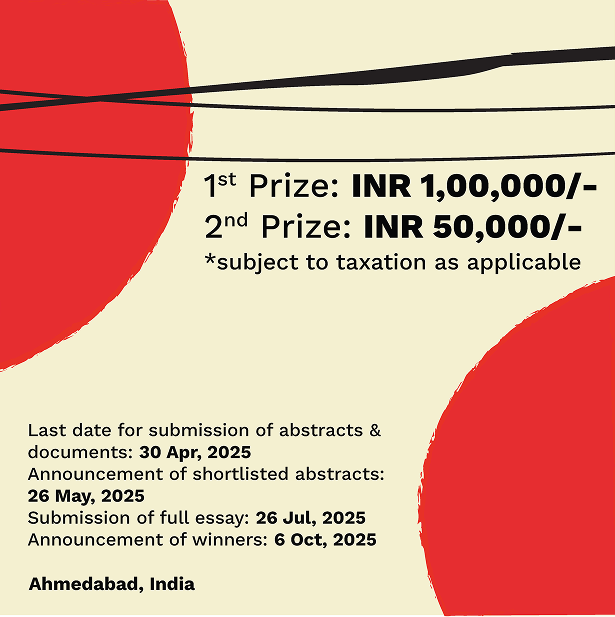
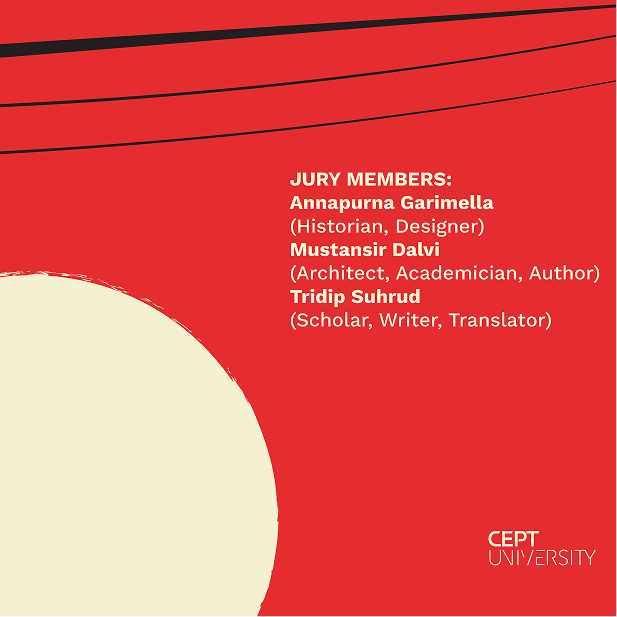
Typography was deliberate and minimal: academic without austerity, allowing the philosophical density of the theme to come through without overstatement. Negative space became an active part of the layout, offering the object and text room to resonate without hierarchy. The final poster allowed the viewer to pause and encounter Abandon not as a collapse but as a quiet, persistent phenomenon, one that invites reflection and imagination in equal measure.
Raw Collaborative
2024